

Shopify and WordPress are both popular platforms for building websites. But they serve different purposes and have unique features.
Choosing the right platform for your online presence is crucial. Shopify is a dedicated e-commerce solution, while WordPress is a versatile content management system (CMS). Both have strong points and specific uses. Understanding their differences helps you make an informed decision.
This guide will walk you through the key distinctions, helping you determine which platform fits your needs best. Whether you’re starting an online store or a blog, knowing the pros and cons of Shopify and WordPress can save you time and effort. Let’s delve into the details and see which platform suits your goals.
Platform Basics
Understanding the basic differences between Shopify and WordPress is crucial. These two platforms offer unique features and cater to different needs. Let’s dive into the fundamentals of each platform to help you make an informed decision.
Shopify Fundamentals
Shopify is a hosted ecommerce platform. It means Shopify takes care of hosting and security. It provides an all-in-one solution. You do not need to worry about technical aspects.
Shopify offers built-in payment gateways and an easy-to-use dashboard. Its drag-and-drop interface is user-friendly. Even beginners can set up a store without coding knowledge.
Here are some key points about Shopify:
- Monthly subscription fees
- 24/7 customer support
- Various themes and apps
- SEO tools to help improve search rankings
WordPress Fundamentals
WordPress is a self-hosted content management system (CMS). It requires you to find your own hosting provider. This offers more control over your site.
WordPress is highly flexible. It is not just for ecommerce. You can create blogs, portfolios, and business sites. It requires some technical knowledge to manage.
Here are some key points about WordPress:
- No monthly fees
- Thousands of plugins and themes
- Full control over customization
- Strong community support
Ease Of Use
Choosing between Shopify and WordPress can be tough. Especially when ease of use is a top priority. Both platforms offer unique features. But how do they compare in terms of user-friendliness?
User Interface Comparison
Shopify has a clean and intuitive interface. It’s designed for beginners. You can easily navigate through the dashboard. Adding products and managing orders is straightforward. The layout is simple and user-friendly.
WordPress, on the other hand, can be complex. The interface is more flexible but less intuitive. It requires more clicks to perform tasks. The admin dashboard can be overwhelming for new users. But it offers more customization options.
| Platform | Interface |
|---|---|
| Shopify | Simple and clean |
| WordPress | Flexible but complex |
Learning Curve
The learning curve for Shopify is gentle. You can set up your store quickly. No coding skills are needed. The platform offers tutorials and support to help you along the way.
In contrast, WordPress has a steeper learning curve. It demands some technical knowledge. Setting up a site takes longer. You may need to understand plugins, themes, and possibly coding. Resources and forums are available, but self-learning is key.
- Shopify: Easy to learn, quick setup, no coding needed.
- WordPress: Steeper learning curve, more technical, requires time.
Customization
Customization is a critical factor when choosing between Shopify and WordPress. Both platforms offer various ways to tailor your online store. Understanding their differences can help you make an informed decision. Let’s delve into the details.
Design Flexibility
Shopify offers a range of design options, but they are somewhat limited. You can tweak colors, fonts, and layouts. However, the overall structure stays within the theme’s framework. This makes it easier for beginners.
WordPress, on the other hand, is highly flexible. You can change almost any aspect of your site. This includes layouts, functionalities, and even the smallest design details. You have complete control over your site’s look and feel.
Theme And Plugin Options
Shopify provides a selection of themes. Some are free, while others are paid. These themes are designed to be mobile-friendly and easy to use. Shopify also offers plugins, but the choices are more limited compared to WordPress.
WordPress boasts a vast library of themes and plugins. Many themes are free, and you can find plugins for almost any feature you need. This makes WordPress a versatile option for customization. You can mix and match to create a unique site.
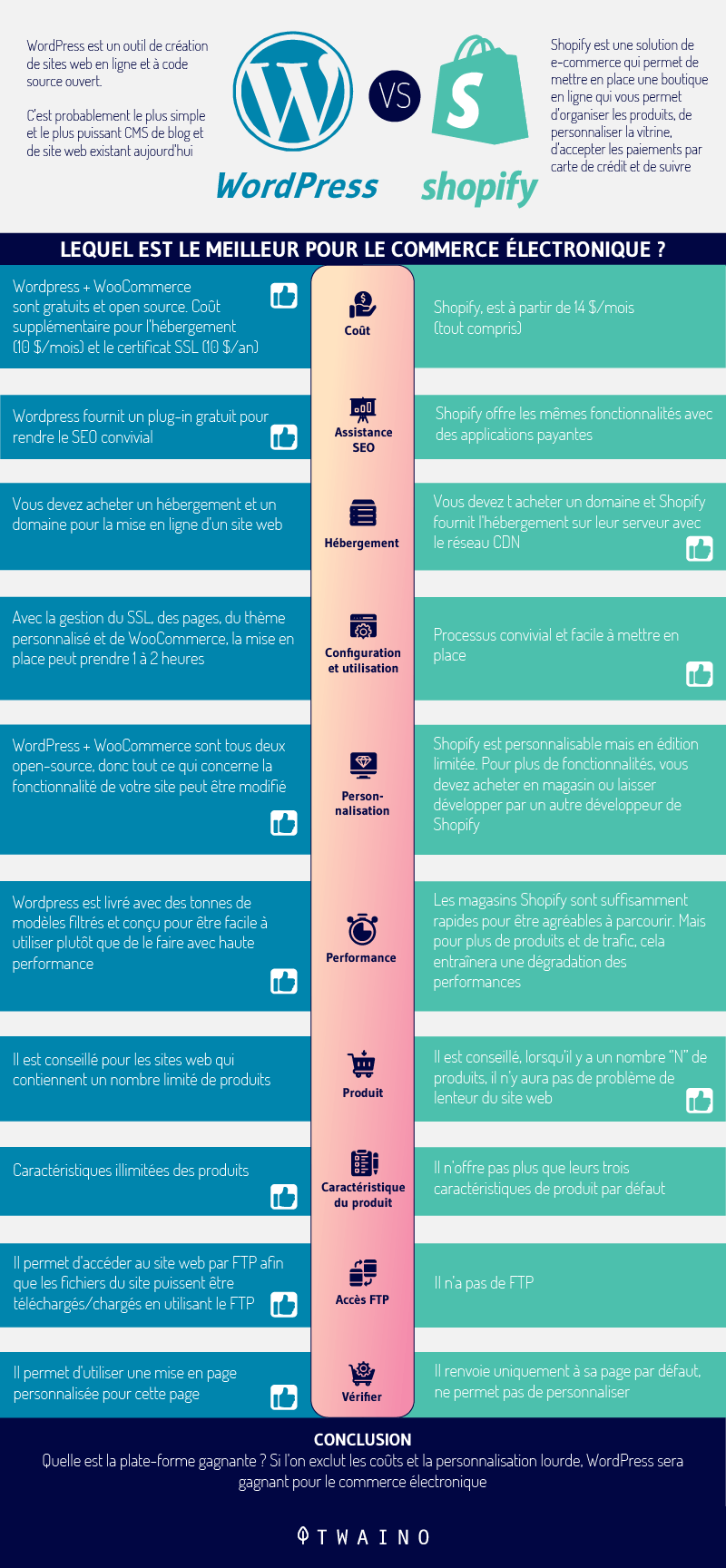
In summary, both platforms have their strengths. Shopify is easier for beginners, while WordPress offers more customization options. Your choice depends on your needs and skill level.
Credit: www.twaino.com
E-commerce Capabilities
Understanding the e-commerce capabilities of different platforms is essential for online business success. Shopify and WordPress both offer unique features for online stores. Let’s explore these options to understand their strengths and which might suit your needs better.
Shopify For Online Stores
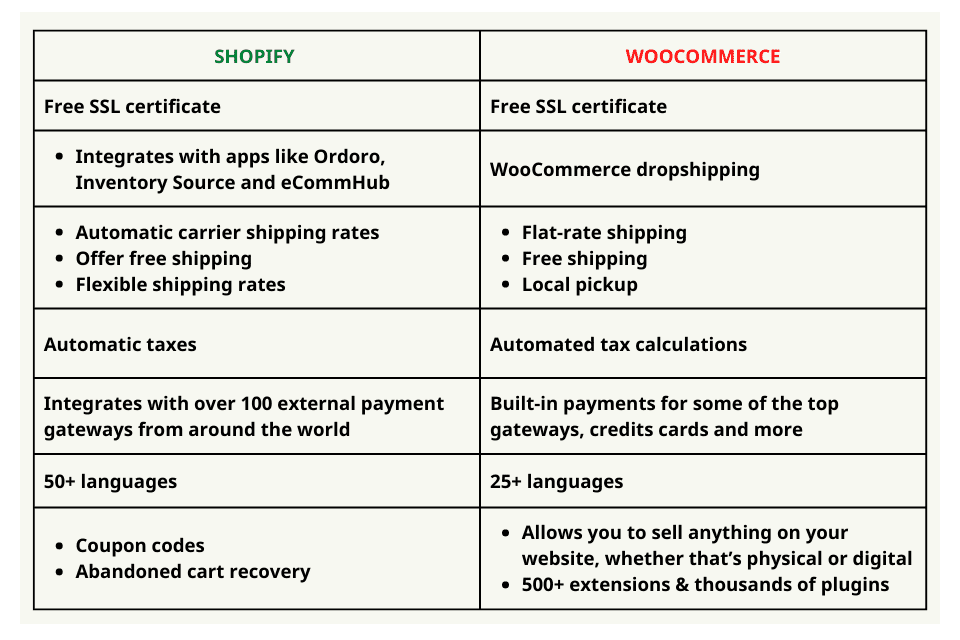
Shopify is a dedicated e-commerce platform. It provides all the tools needed to create and manage an online store. The platform offers a range of customizable templates. These templates help you design a professional-looking store quickly. Shopify includes built-in payment processing. This ensures secure transactions for your customers.
Shopify’s app store offers many plugins. These plugins can extend the functionality of your store. For example, you can add features like inventory management, marketing tools, and customer support. Shopify also handles web hosting and security. This means you don’t need technical knowledge to run your store smoothly.
WordPress With Woocommerce
WordPress is a versatile content management system. By adding the WooCommerce plugin, you can transform your WordPress site into an online store. WooCommerce is highly customizable. It integrates seamlessly with WordPress themes and plugins.
With WooCommerce, you can manage products, inventory, and orders with ease. It supports various payment gateways, offering flexibility for your customers. WooCommerce also has many extensions. These extensions can enhance your store’s functionality, such as adding shipping options or marketing tools.
While WordPress with WooCommerce requires more setup than Shopify, it offers greater control. You can customize every aspect of your store. This makes it a good option for those who want a tailored e-commerce experience.
Pricing
Pricing is a major factor to consider when choosing between Shopify and WordPress. Both platforms have different pricing structures, which can impact your decision. Let’s dive into the details.
Cost Comparison
Shopify offers a straightforward pricing model. They have three main plans:
- Basic Shopify: $29 per month
- Shopify: $79 per month
- Advanced Shopify: $299 per month
Each plan includes hosting, SSL certificates, and customer support. Shopify also offers a 14-day free trial, so you can try it out before committing.
WordPress has a more flexible pricing structure. The main costs include:
- Domain name: $10-15 per year
- Web hosting: $3-25 per month (depending on the provider)
- Theme: Free or premium (up to $100 one-time)
- Plugins: Free or premium (varies in cost)
WordPress costs can vary greatly based on your needs. Unlike Shopify, WordPress does not offer a free trial but has free plans with limited features.
Value For Money
Shopify’s pricing includes many built-in features. For example, hosting, security, and customer support are included. This makes it a great value for those who need an all-in-one solution.
WordPress offers more customization. You can choose your own hosting, themes, and plugins. This flexibility can save money if you only need basic features. But, it can also be more expensive if you need premium options.
For small businesses, Shopify’s fixed costs can be easier to manage. WordPress can be more cost-effective if you have technical skills and can manage your site.
Seo And Marketing
SEO and marketing play crucial roles in the success of any online store. Shopify and WordPress offer different tools and features for these purposes. Understanding these differences can help you make a better choice for your business needs.
Seo Tools
Shopify has built-in SEO features. It helps you edit meta tags, create sitemaps, and optimize URLs. These features make it easier for your store to rank higher on search engines.
WordPress, paired with plugins like Yoast SEO, offers more advanced SEO capabilities. You can customize almost every aspect of your site’s SEO. This includes more control over meta descriptions, keywords, and image optimization.
Marketing Features
Shopify provides integrated marketing tools. These include email campaigns, social media integration, and discount codes. The platform also supports abandoned cart recovery, which helps in increasing conversions.
WordPress offers flexibility with various marketing plugins. You can use tools like Mailchimp for email marketing or WooCommerce for ecommerce. This allows you to choose the tools that best fit your marketing strategy.
Support And Community
Understanding the support and community available for your chosen platform is crucial. Shopify and WordPress offer distinct support systems and communities that cater to different needs. Let’s explore these differences.
Customer Support
Shopify provides 24/7 customer support via live chat, email, and phone. Their support team is known for quick responses and helpful solutions. This can be very reassuring, especially for beginners.
On the other hand, WordPress does not have a centralized support system. Users rely on forums, documentation, and third-party providers. This can be challenging if you prefer direct support.
Community And Resources
Shopify boasts an active community with forums, blogs, and an extensive knowledge base. The Shopify Academy offers courses to help you grow your store. The community is vibrant, and many users share tips and strategies.
WordPress has a vast community with numerous forums, blogs, and tutorials. Users can find answers to almost any question. WordPress has been around for years, so the wealth of knowledge is immense. Plus, many developers offer free and paid plugins to extend functionality.
| Aspect | Shopify | WordPress |
|---|---|---|
| Customer Support | 24/7 live chat, email, phone | Forums, documentation, third-party providers |
| Community Resources | Active forums, Shopify Academy | Extensive forums, tutorials, plugins |
Choosing between Shopify and WordPress depends on your need for direct support and community resources. Both have strong points, so consider what fits your situation best.

Credit: www.wordpressindia.co.in
Credit: thimpress.com
Frequently Asked Questions
What Is Shopify Used For?
Shopify is an e-commerce platform designed for building online stores. It offers tools for managing products, payments, and shipping.
Can WordPress Be Used For E-commerce?
Yes, WordPress can be used for e-commerce with plugins like WooCommerce. It offers flexibility and customization options.
Which Is Easier To Use, Shopify Or WordPress?
Shopify is generally easier for beginners due to its user-friendly interface. WordPress requires more technical knowledge.
Is Shopify More Expensive Than WordPress?
Shopify has monthly subscription fees, while WordPress is free but may incur costs for hosting and plugins.
Conclusion
Choosing between Shopify and WordPress depends on your business needs. Shopify is great for e-commerce beginners. It offers ease of use and built-in tools. WordPress offers more flexibility and control. It suits those comfortable with plugins and customization. Both platforms have strengths.
Consider your technical skills and business goals. Evaluate costs, features, and scalability. Make an informed choice to best support your online store.
